Wife
Sara Goethals
Sara was certainly still alive in 1655 (she was still a godmother in that year). Beyond that I have found no information about her.
Lineage / Generations 02–03
Farmers, home weavers and family in old Waarschoot.
Follow their storyFrom father to son
02Jan IVan Holderbekec. 1569 – before 164803Jan IIVan Holderbeke1600 – 1676Life dates from the biographies · uncertainties are noted with the story.
Original research and texts by Roland Van Holderbeke · Pagina3.htm. The author’s words, his conjectures and the uncertainties are preserved.
About the sourcesGeneration 02 / Farmer & home weaver
According to the heading
C. 1569 – before 1648
Jan or Joannes Van Holderbeke [21] was probably the son of Franciscus Van Holderbeke [103]
He is the first of a series in direct line who will bear the name Jan or Joannes. In the deeds and registers he is sometimes referred to as “Jan d’oudde” to distinguish him from his son, sometimes recorded as “Jan de Jonghe” (the Younger). But confusion is possible, because two generations later the same suffixes are used
The milestones
Events as recorded in the original text.
He was born in Waarschoot c. 1569.
He married Sara Goethals [194] c. 1593 in Waarschoot (estimated).
He died in Waarschoot on 21 October 1631.
Jan was a very distinguished and well-to-do gentleman in Waarschoot. From the register of the Pelderrechten (burial dues) we can note that Jan was buried in the church itself.
The people around Jan I
Sara Goethals
Sara was certainly still alive in 1655 (she was still a godmother in that year). Beyond that I have found no information about her.
The life story
As an infant Jan came safely through the plague epidemic of 1570, as did his parents and other relatives.
The successive lootings by the Geuzen (the Protestant rebels known as the Beggars) and roving mercenaries in 1573, 1580 and 1581 did not affect him. More on this in the history chronicle of Waarschoot (later)
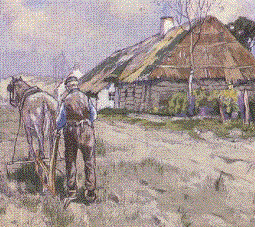
That Jan was one of the most important people in Waarschoot we can deduce from the fact that he was buried in the church (book of Pelderrechten). That register records, among other things, that he received 9 lessons (chants), which was the highest form of service and cost 3 Sch. (schellingen, shillings) at the time, and that the earth brought in for his church grave was worth 12 Gr (groten, groats).
Jan would not be the only Van Holderbeke to be buried in the church in that period. His son Jan “de jonghe” (Jan II) and his daughter-in-law Betgen (Elisabeth) De Dobbelaere would also be buried in the church.
The expression “stinkend rijk” (‘stinking rich’) dates from that time, because of the foul smell of corpses that hung in the churches when graves were dug up. It was mostly only the nobles, the rich and the priests who were buried in the church, hence: stinking and rich.
Sara appears only as the mother of the children and a few times as godmother to other children inside and outside the family, but each time with the mention ux (= wife) or widow of Jan Van Holderbeke. I have found no dates of birth, marriage or death for Sara Goethals, but the entries in the baptism register where she is recorded as godmother still give a whole range of information from which her personal dates can be approximately determined.
Open questions
There is a slight uncertainty about some dates; a few of the years given are estimated (c....). Taking into account the customs of the time and the dates found for the other relatives, these could nevertheless be determined with a certain accuracy (where a date is complete, it also appears like that in the deeds and registers and is therefore exactly established).
My estimates were also confirmed to me by three other family historians.
Jan Van Holderbeke therefore really did exist (geacteerd: recorded in deeds), and his name and that of his wife, Sara Goethals, appear frequently in the registers and deeds of the time, but unfortunately nowhere is his exact date of birth mentioned.
The year of his death is 1631. One register gives 1631 as the year of his death (Pelderrechten), but in the birth and baptism register of 1932 he is still recorded as living, at a godmothership of his wife Sara (Sara Goethals ux Jan Van Holderbeke); this last entry is probably a mistake.
So we also know for certain that this Jan Van Holderbeke was married to Sara Goethals and that he was also the father of Jan (Joannes) Van Holderbeke (according to his son’s birth register).
In the register of the Peldersrechten we find that Jan Van Holderbeke “d’oude” was buried in the church itself, which means that our Jan was a very distinguished and wealthy figure in old Waarschoot.
In total I found eight children in the deeds and registers with Jan as their father. Only Michael is not 100% recorded in deeds (probably to be found in a neighbouring parish).
Only one name comes forward as his father (for the time being), and that is Franciscus Van Holderbeke. Another slight possibility is that Franciscus is an older brother of Jan, or another relative? But then WHO was his father?
In Waarschoot nothing more is to be found on this, or I have found nothing more.
More research is needed for this in the archives of Ghent (the city of Ghent and above all the Diocese) or the Rijksarchieven (State Archives) in Ghent, Beveren or Brussels, and of the Diocese of Tournai (because Ghent is still only a “young” diocese). In the archives of the “Bibliothèque Nationale de France” in Paris I have not found any better information either.
The book of the Peldersrechten or the tax archives may perhaps give more information.
After the old St Ghislenus church in Waarschoot was completely destroyed by fire, archaeological excavations were carried out. Some old graves were discovered in the church, here and there with paintings. Perhaps one of those graves belonged to our ancestors, among them that of this Jan ?
Generation 03 / Weaver & villager
According to the heading
1600 - 1676
Jan (Joannes) Van Holderbeke [22] was the first-born son of Jan (Joannes) Van Holderbeke [21] and Sara Goethals [194]. He was the second in the lineage to be given the name Jan.
The milestones
Events as recorded in the original text.
He was born in Waarschoot c. 1600.
He married Elisabeth Dobbelaere [23] on Saturday 24 November 1629 in Waarschoot.
First marriage: ondertrouw (the formal announcement of the intended marriage) in Eeklo on 25.10.1629
He married a second time, to Livina Bultynck [24], on Friday 1 June 1635 in Waarschoot.
The witnesses were Stoffel Maeremans [226] and Pieter Beeckmans [227].
Ondertrouw in Waarschoot on 01.05.1635.
He died in Waarschoot on Thursday 3 December 1676.
Daily life
The people around Jan II
c. 1599 – 1631
Elisabeth, also called Betgen, was the daughter of Jan Dobbelaere, in his time Baljuw (bailiff) of Eeklo [104], and of Petronella Roelandts [105], both from Eeklo.
Whether she had brothers or sisters is not known to me.
¤ She was born in Eeklo c. 1599.
¤ She died in Waarschoot on 26 August 1931. “Betgen” (Elisabeth) was buried in the church of Waarschoot itself, which shows how distinguished the family was at that time (book of the Pelderrechten).
c. 1599 - 1689
About Livina Bultynck I have been able to find only a little. Her parents, brothers and sisters are unknown to me.
¤ She was born c. 1599.
¤ She died in Waarschoot on Monday 10 October 1689.
The life story
Every beginning is difficult: so as not to make the research too easy, our Jan chose a first wife from outside the municipality (she came from Eeklo). About his second wife there is a little more to be found, but even so, quite a lot of research remains to be done.
Since Jan Van Holderbeke lived in Arisdonk, and that part of Waarschoot then fell under the Keure van Sleidinge (the keure, a local jurisdiction, of Sleidinge), it is possible that we must search further there. Probably more children were born than the two registered in Waarschoot. Jan was an extremely important person and enjoyed high esteem, both in Waarschoot and in Sleidinge.
Jan was a witness at the marriage of his sister Christophora in Waarschoot on 13.06.1627 to De Jaeghere Georgius. He also appears a few more times in the registers as godfather and marriage witness.
As a boy in 1613 he will have witnessed the founding of a brewery in Waarschoot; it was run by Pieter Mortier (according to a patent of the Archdukes of 26.03.1613).
Livina Bultynck appears frequently as godmother at the baptisms of the grandchildren, but also outside the family, which shows that she must have been a dearly loved woman.
Livina Bultynck reached the very great age of 90 and was thereby among the five oldest inhabitants of Waarschoot in the 17th century (1610-1700). The oldest was Claeys Petronella at 96, followed by Doosterlinck Joannes at 95, and Lippens Franciscus and Varmeere Georgius at 92 each (so the men were in the majority, 3-2).
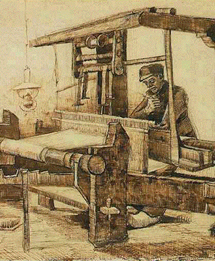
How did Jan and his wives live? If we look at the paintings of Breughel, we have to say: very well. Whether that was really so, we leave aside. Personally I think it was, because the Van Holderbeke's still enjoy a tasty bite and a good drink; but if we read through the history of Waarschoot, life was anything but rosy.
Archive documents
Copies of the entries in the parish registers of both marriage announcements (ondertrouw) and of both marriage certificates are in my possession.
Further along the family line